The Science of Experience
Sixty years of research. One breakthrough. And everything that came after.
The Breakthrough
At eight years old, Dr. Zetlin created the first LifeLight prototype. It was crude — capable only of generating basic visual images driven by brain function. But the underlying theory was sound, and it changed everything.
He called it direct neural interface — a non-invasive system for reading and writing to the nervous system's native signaling pathways. The premise was straightforward: synthesized sensory signals, delivered through the same channels the brain already uses, are processed identically to organic input. Build an interface precise enough, and the distinction between generated and real becomes physiologically meaningless.
From that moment, it was simply about growth. Sixty years of refinement. From crude visual output to full multi-sensory immersion indistinguishable from baseline reality. Dr. Zetlin was surrounded by the greatest scientific minds available — they were his teachers, but they soon became his pupils.
Active Research
Sensory Fidelity
LifeLight generates output across visual, auditory, tactile, gustatory, olfactory, proprioceptive, and thermal channels. Each channel is calibrated to the individual participant's neural baseline during initial profiling.
Current research focuses on closing the measurable gap between rendered output and organic sensation. Participant-reported distinguishability is near zero. Instrumented testing still detects differences in edge cases. We're working on those.
Memory Architecture
During initial calibration, LifeLight indexes a participant's long-term memory architecture — places, people, sensations, emotional associations, subconscious patterns. This index is read-only and forms the foundation of every experience the engine generates.
Current research explores how the engine handles novel memory reconstruction — experiences that draw from real memories but recombine them in ways the participant hasn't consciously imagined. Early results suggest the engine can improvise, generating experiences that feel authentically personal even when they're technically new.
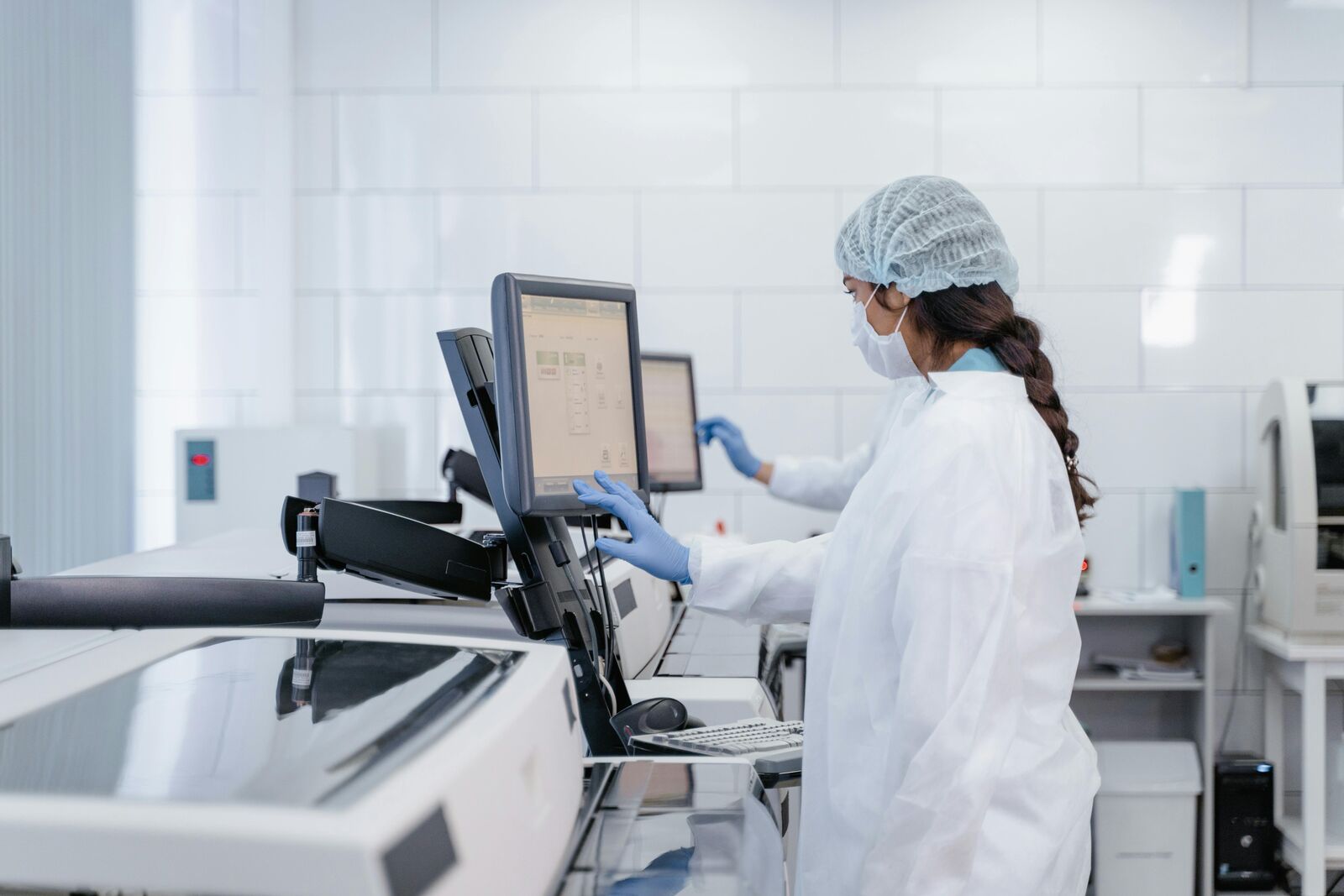
Kersh Bionutrition lab · Gloid compound analysis · Rubic City processing center
Transdermal Nutrition
Gloid — our proprietary nutrient compound — was the last piece of the puzzle. Developed over fourteen years by our vedder science team, it bypasses the body's normal metabolic processes entirely. Everything is broken down to base chemical structure and absorbed through the skin.
Three formulations are currently in production:
- Green — Essential nutrition. Vitamins, minerals, caloric baseline.
- Orange — Cognitive support. Neural pathway maintenance during extended immersion.
- Blue — Deep-session endurance. Muscle preservation and circulatory support for continuous sessions.
Manufactured exclusively by Kersh Bionutrition with processing centers adjacent to every fulfillment center. Perfecting the delivery system was what made long-duration sessions possible. Once participants could stay alive inside the tubes indefinitely, they had no reason to come out.
Distributed Grid Computing
The main grid processes millions of concurrent sessions across 800+ fulfillment centers. Each session is a unique rendering pipeline — driven entirely by one participant's neural data — that must maintain sub-millisecond latency on sensory output.
Research in this domain focuses on scaling the grid to support continued facility expansion while maintaining the per-session quality that participants expect. The alpha grid — the independent failover system housed in the Rubic City Alpha Core — serves as the integrity baseline against which all main grid operations are validated.
Processing Code Integrity
The v3.1 stability incident demonstrated that unauthorized modifications to the experience engine's processing code can have cascading, unpredictable effects — including accessing subconscious fear architectures that the engine indexes but is never authorized to surface.
Post-incident research has produced hardware-level safeguards: physical circuit breakers on sensory output, continuous integrity validation against the origin code baseline, and dual-authorization requirements for architect-level access. The origin code itself remains classified and is known to a single individual.
Waste Processing & Life Support
Every jump tube contains two black pads flush with the interior surface. One delivers gloid nutrition through the skin. The other removes metabolic waste through the same transdermal mechanism. Two small zippers on the participant's jumpsuit align with the pads for optimal contact.
Current research aims to reduce the already-minimal physical overhead of the waste system, with the goal of making continuous sessions truly zero-maintenance from the participant's perspective. We're not there yet. We're close.
Six Decades of Development
Year 0
Dr. Zetlin, age 8, builds the first LifeLight prototype. Crude visual images generated solely by brain function. The direct neural interface concept is proven.
Year 12
Audio integration achieved. Participants can hear environments generated from their memories. Fidelity remains low but consistent.
Year 24
Touch and proprioception added. For the first time, participants report forgetting they're in a session. The "twenty more minutes" phenomenon is first documented.
Year 31
Taste and smell integrated. Full five-sense immersion achieved in laboratory conditions. Participants describe experiences as "indistinguishable from memory."
Year 38
First fulfillment center constructed in Rubic City. The hollow-core, central-tube architecture is designed. Alpha grid goes online.
Year 42
Vedder team develops gloid transdermal nutrition system. Extended sessions become possible. Participant session lengths begin to increase dramatically.
Year 50
One hundred fulfillment centers operational. The grid scales to support millions of concurrent sessions. Veelox society begins to reorganize around LifeLight.
Year 57
Dr. Zetlin enters his own jump. He has been inside continuously since. His environment — the Barbican — is the most complex single-participant session ever created.
Year 60
LifeLight v4.0 launches. Real-time neural sync, enhanced sensory fidelity, seamless transition mode. 800+ fulfillment centers. 12 million active participants. The boundary between experience and reality becomes functionally meaningless.
Experience the science yourself
Everything we've built over sixty years exists for one moment: your first jump.